
Cracked Heels Salve / Balm in Pakistan: Causes & What Actually Works
For Deep, Stubborn Cracks — Softening, Not Just Sealing Why heels split, and what actually helps in Pakistan’s dry climate Key Takeaways…
For Deep, Stubborn Cracks — Softening, Not Just Sealing
Why heels split, and what actually helps in Pakistan’s dry climate
Key Takeaways
- Deep cracks aren’t just dryness: They form when heel skin thickens, hardens and then splits under pressure.
- Petroleum jelly seals; it doesn’t condition: It holds moisture in, which helps, but it adds nothing else to the skin.
- Urea is the strongest softener: It actively breaks down thick skin. Natural oil balms suit mild-to-moderate cracks and plant-based preferences.
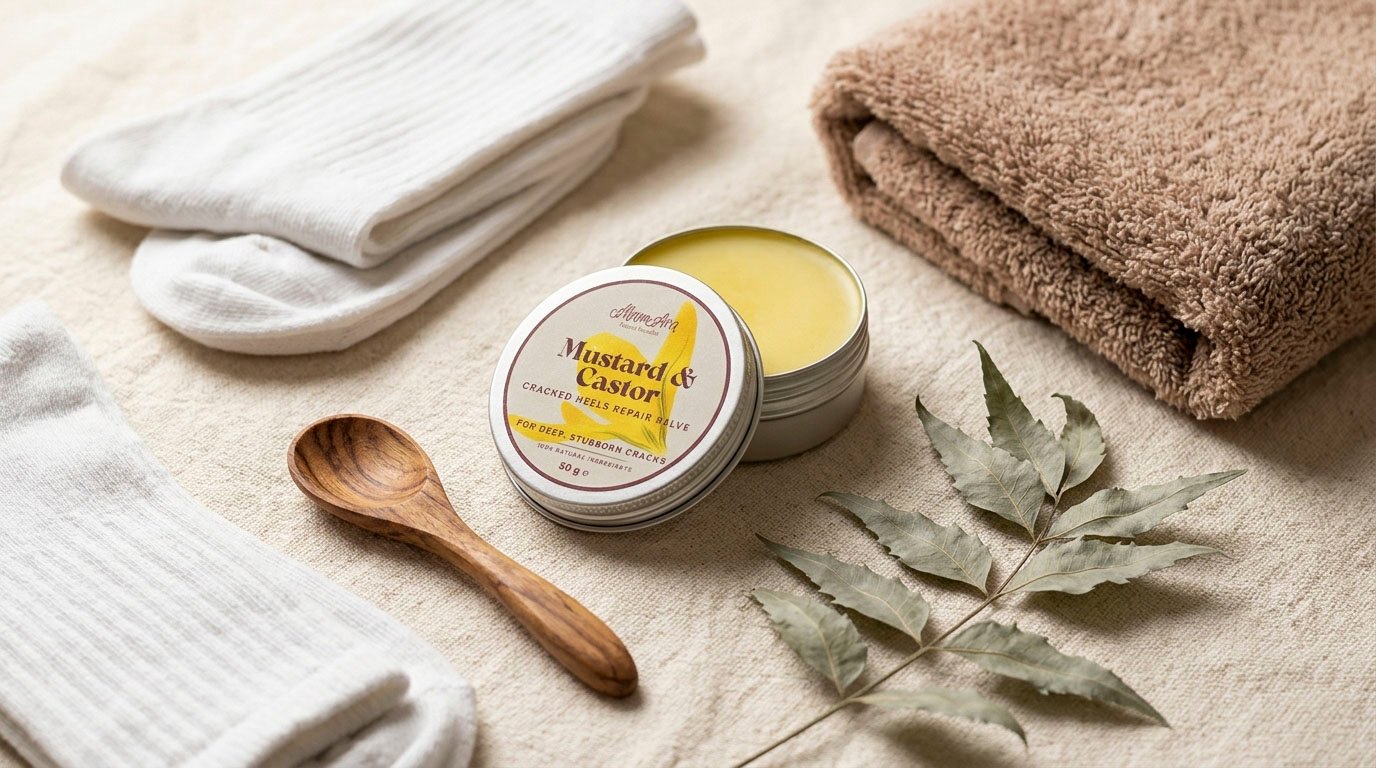
- Mustard & Castor is the natural option: Castor oil, shea butter and beeswax soften and protect, and traditional mustard oil adds warmth.
- Consistency wins: Nightly application with cotton socks matters more than any single product.
Why Do Heels Crack in Pakistan? (The Real Causes)
Heels crack because the skin there is naturally thick and has few oil glands, so when it dries out and takes pressure from standing and walking, it splits instead of flexing. Pakistan’s weather makes this worse: dry heat, dusty air and cold, dry winters pull moisture out of heel skin faster than it can recover.
Everyday habits add to it. Open-back chappals, walking barefoot on hard floors, long hot showers, and standing for hours all push the heel pad outward and stress already-dry skin. Medical conditions such as diabetes or thyroid problems can also play a part, which is why persistent or painful cracks deserve a doctor’s opinion (more on that below).
Is It Dry Skin or Hardened Skin? (Why Moisturizer Alone Often Isn’t Enough)
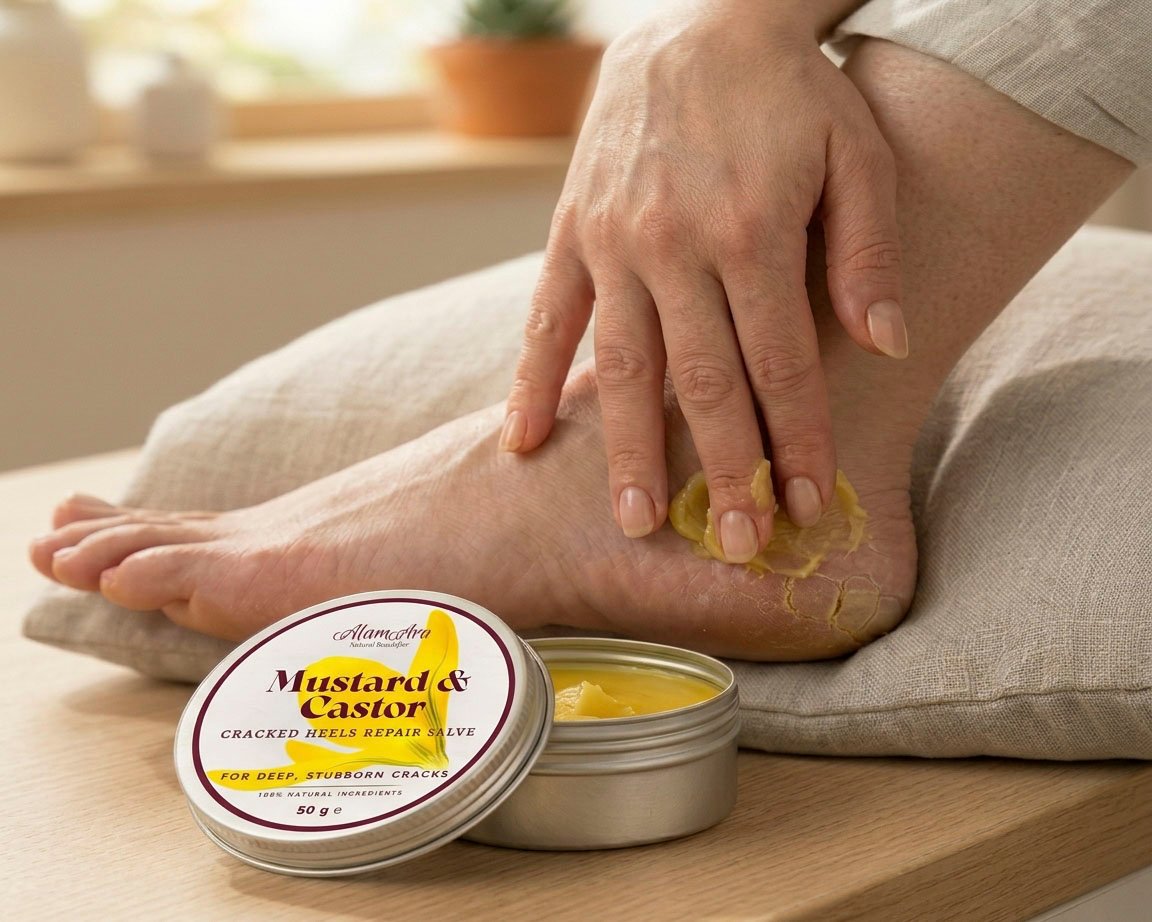
Deep, painful cracks are usually a hardened-skin problem, not just a dryness problem: the skin has thickened into a callus-like layer that can’t stretch, so it splits. A light lotion can’t do much for skin that has already hardened and split.
| Sign | Dry Heels | Hardened, Cracked Heels |
|---|---|---|
| Look | Rough, flaky, tight | Thick, yellowish, with visible splits |
| Feel | Tight after washing | Can sting or hurt when walking |
| Best approach | Regular moisturizing | Softening, protecting and gentle, consistent care |
“A deep crack isn’t dry skin you can moisturize away — it’s hardened skin that has already split.”
Does Petroleum Jelly Help Cracked Heels?
Yes, partly. Petroleum jelly is an occlusive: it forms a layer that holds moisture in, which helps skin soften over time. That is a genuine benefit, and it’s why petroleum-based balms are so common.
The limit is what it doesn’t do. It contains no conditioning oils or butters, and it is derived from petroleum, which some people prefer to avoid. Most cracked-heel products, petroleum jelly included, work mainly by slowing moisture loss. That is useful, but it is not the same as actively softening the thickened skin underneath.
Urea Cream vs Natural Oil Balm: Which Is Better for Cracked Heels?
Urea is the stronger option for very thick, hardened heels because it actively breaks down thickened skin. A natural oil balm is a good fit for mild-to-moderate cracks, or if you prefer plant-based care. Neither is “right” for everyone.
| Approach | How It Works | Best For |
|---|---|---|
| Petroleum jelly | Occlusive seal that holds moisture in | Basic protection and overnight sealing |
| Urea cream | Keratolytic: actively breaks down thick, hardened skin | Very thick calluses and severe hardening |
| Natural oil & butter balm | Conditioning oils soften and cushion; butters and beeswax protect | Mild-to-moderate cracks, plant-based preference, no petroleum or mineral oil |
Urea is a legitimate, effective ingredient and worth respecting. If your heels are extremely thick or painful, ask a pharmacist or dermatologist about it. If you’d rather stay with natural ingredients, a well-built oil-and-butter balm is the route to take.
What Do Mustard Oil and Castor Oil Do for Cracked Heels?
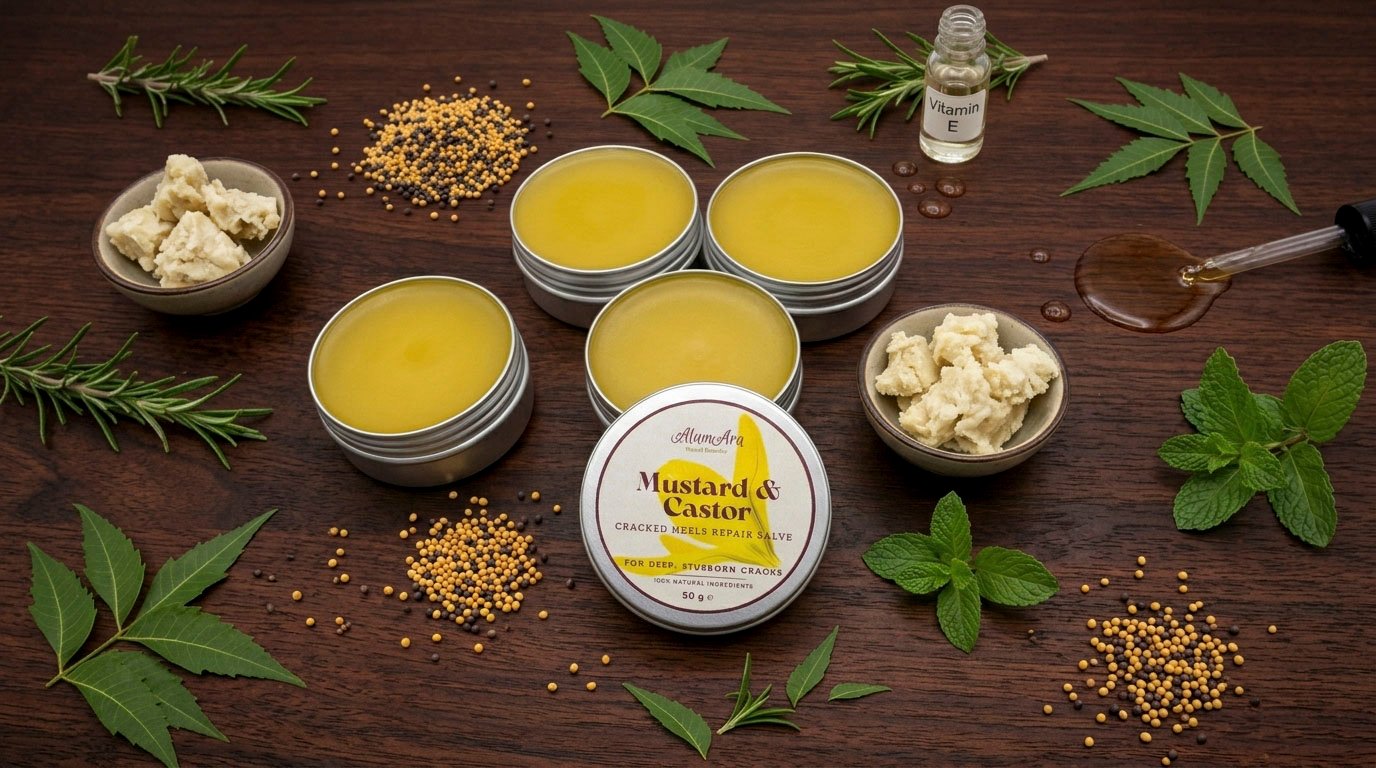
Castor oil is rich in ricinoleic acid and is a thick, conditioning emollient that softens rough, hardened skin. Mustard oil is a traditional warming oil that has long been massaged into tired feet across South Asia.
- Castor Oil: Conditions and softens thickened, rough skin.
- Mustard Oil: Traditional warming oil for foot massage.
- Shea Butter & Beeswax: Deep moisture and a protective barrier.
- Neem & Tea Tree Oil: Traditionally used for their cleansing properties.
- Vitamin E: Antioxidant that supports skin comfort and moisture. and
- Mint & Rosemary: Fresh herbal aroma.
That combination is what Alam Ara’s Mustard & Castor Cracked Heel Salve is built on: natural oils, butters and beeswax, with no petroleum and no mineral oil.
Mustard oil is strong and can irritate sensitive skin. Always patch test, and keep it off bleeding or open cracks.
How Do You Treat Cracked Heels at Home? (Simple Overnight Routine)
Wash and dry your feet, massage a small amount of balm into the heels, and wear cotton socks overnight. Doing this every night matters more than using a lot of product once.
| Step | What To Do |
|---|---|
| 1. Wash & dry | Wash feet and dry thoroughly, especially between the toes and around the cracks. |
| 2. Apply | Massage a small amount of balm onto heels and any hardened areas. |
| 3. Cover | Wear clean cotton socks overnight to help absorption. |
| 4. Repeat | Use daily: mornings for tired, aching feet; nights for deeper care. |
Tip: Avoid picking at or aggressively scrubbing deep cracks. A cracked heel is open skin, so keep it clean and be gentle.
When Should You See a Doctor About Cracked Heels?
See a doctor if cracks are bleeding, very painful, look infected, or don’t improve with regular care, and always if you have diabetes. Home care is for ordinary dryness and hardening, not for infection or underlying conditions.
Red flags: Redness spreading around the crack, swelling, warmth, discharge, or fever.
Higher risk: Diabetes or reduced foot sensation. Get cracks checked early rather than treating them at home.
Ready to Give Your Heels a Proper Reset?
Natural oils, butters and beeswax. No petroleum, no mineral oil. Handmade in small batches in Lahore.
→ Shop Mustard & Castor Cracked Heel SalveA Final Word
Healthy heels aren’t about one miracle product. They’re a small nightly ritual, done consistently, with ingredients that match what your skin actually needs.
Dry skin elsewhere too?
Read: The Ultimate Dry Skin Rescue — A 3-Step Routine for Radiant Results →
Does petroleum jelly help cracked heels?
Partly. It seals moisture in, which helps skin soften over time, but it contains no conditioning oils. A balm that pairs a seal with castor oil and shea butter does more than seal.
Is urea or natural oil better for cracked heels?
Urea is stronger on thick, hardened calluses. Natural oils like castor and shea suit mild-to-moderate cracks and plant-based preferences. Very thick or painful heels may need urea or a doctor’s advice.
How long does it take to heal cracked heels?
Heels often feel softer within the first few nights of regular use. Deep cracks usually take a few weeks of consistent daily care, and results vary from person to person.
Is mustard oil good for cracked heels?
Mustard oil has long been used in Pakistan and South Asia as a warming foot-massage oil. It is strong and can irritate sensitive skin, so patch test first and keep it off open or bleeding cracks.
Aerhiyan phatna ka ilaj kya hai? (ایڑیاں پھٹنے کا علاج)
Roz raat ko pair dho kar achi tarah sukhayein, heels par balm lagayein aur cotton socks pehen kar soyein. Pair ki aerhiyon ko zyada zor se na ragrein. Agar dararein gehri hon, khoon aaye ya infection lage to doctor se rujoo karein.


