
Goat Milk vs Coconut Milk vs Rice Milk Soap: Which One Does Your Skin Actually Need? (2026 Pakistan Guide)
TL;DR — Quick Answer Alam Ara’s three milk soaps solve three different skin problems, not the same one. Goat Milk Soap (Rs….
Alam Ara's three milk soaps solve three different skin problems, not the same one. Goat Milk Soap (Rs. 1,350) is best for dry, mature, or eczema-prone skin needing gentle renewal — lactic acid plus Bakuchiol. Coconut Milk Soap (Rs. 1,300) is best for everyday moisture replenishment — lauric acid rebuilds the skin's lipid bilayer directly. Rice Milk Soap (Rs. 1,300) is best for silky texture and a luminous, light-catching finish, rooted in the traditional rice-water ritual. All three are handmade in small batches in Lahore using the cold-process method.
Key Takeaways
- Not all "milk soap" is the same claim wearing three labels. Goat, coconut, and rice milk each bring a genuinely different mechanism to the bar — exfoliation, moisture, and texture respectively.
- Goat Milk Soap is the renewal pick: naturally occurring lactic acid (a mild AHA) plus Bakuchiol Seed Oil for retinol-like renewal without irritation — best for dry, reactive, or eczema-prone skin.
- Coconut Milk Soap is the moisture pick: lauric acid replenishes the skin's lipid bilayer directly rather than just sitting on the surface — best for everyday dry-skin care.
- Rice Milk Soap is the texture-and-glow pick: built around the centuries-old rice-water ritual for silky-smooth, light-reflecting skin — not a "brightening" or heavy-moisture claim, a texture one.
- First-time buyer? Start with whichever mechanism matches what your skin is actually doing right now, not which ingredient sounds more premium.
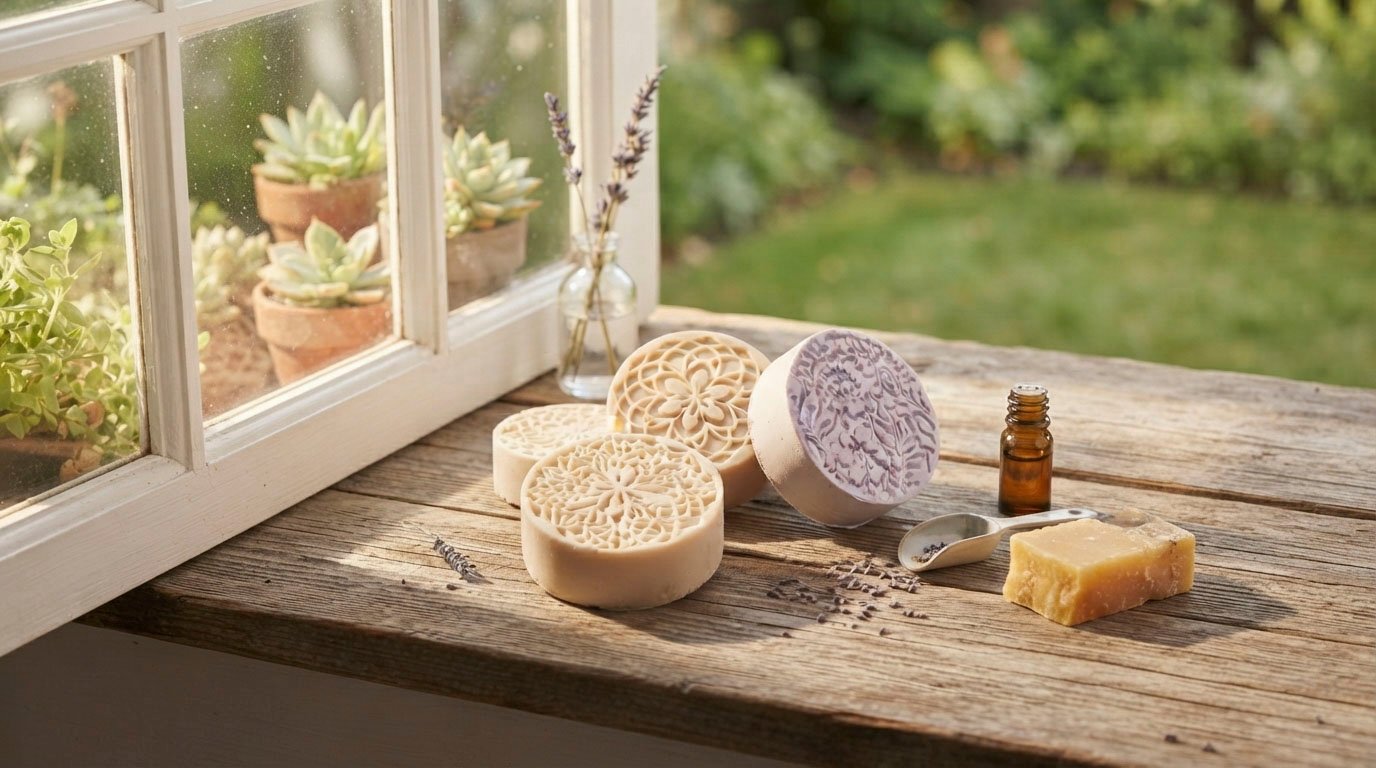
Why Three Different Milks?
Milk works in soap because it adds fat, protein, and naturally occurring acids that commercial detergent bars strip out — but goat milk, coconut milk, and rice milk each contribute a different one of those three, which is why we formulate them as three separate bars instead of three versions of the same bar.
Most "milk soap" on the market treats milk as a single interchangeable marketing word — swap in whichever milk is cheapest that month, keep the same base recipe, call it moisturizing. That's not how we built this collection. Each of our three milk soaps starts from a different base oil blend, chosen specifically to work with what that particular milk brings to the bar, not around it.
- Goat milk brings naturally occurring lactic acid — a genuine alpha-hydroxy acid, meaning it gently dissolves the bonds holding dead skin cells together.
- Coconut milk brings concentrated lauric acid, the same fatty acid your skin's own natural lipid layer is partly built from.
- Rice milk brings starches and proteins historically tied to smoothness and light-reflecting skin — the same principle behind the traditional rice-water ritual.
That's three different jobs. Here's how each bar does its job.
1. Goat Milk Soap — Best for Gentle Renewal
Best for Dry, Mature & Eczema-Prone Skin — Rs. 1,350 — Small-Batch Cold-Process
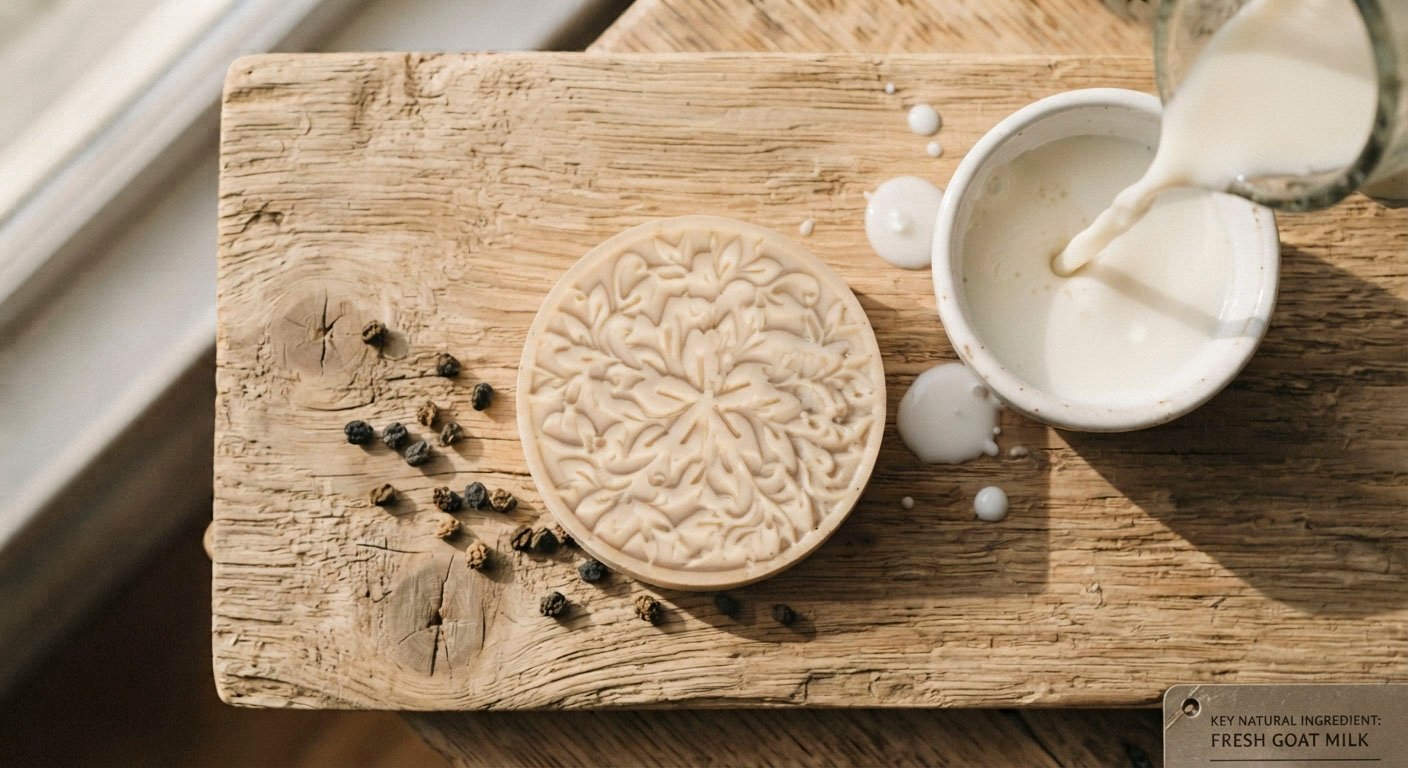
Goat Milk Soap is the right choice for dry, reactive, or eczema-prone skin because its naturally occurring lactic acid — boosted further in this formula — works as a mild alpha-hydroxy acid that clears dead skin buildup without the barrier disruption harsher chemical exfoliants cause on already-compromised skin.
This is the one bar in the collection built around renewal rather than moisture alone. Real fresh goat milk is added twice during the cold-process method for maximum nutrient retention, and Bakuchiol Seed Oil — a plant-derived, retinol-like active — supports skin cell turnover without retinol's typical irritation risk. Allantoin is included specifically to calm skin that's already reactive, so the exfoliation doesn't come at the cost of comfort.
Why This Bar Is Different
- Naturally occurring lactic acid gently clears buildup — the one genuine chemical-exfoliation mechanism in this whole collection
- Bakuchiol Seed Oil supports renewal without Retinol's sensitivity risk
- Allantoin calms and protects reactive, compromised skin during use
- Left virtually unscented — a deliberate choice that also makes it a strong pick for male customers who prefer fragrance-free bars
2. Coconut Milk Soap — Best for Daily Moisture
Best for Everyday Dry Skin — Rs. 1,300 — PCSIR Grade 1 Certified
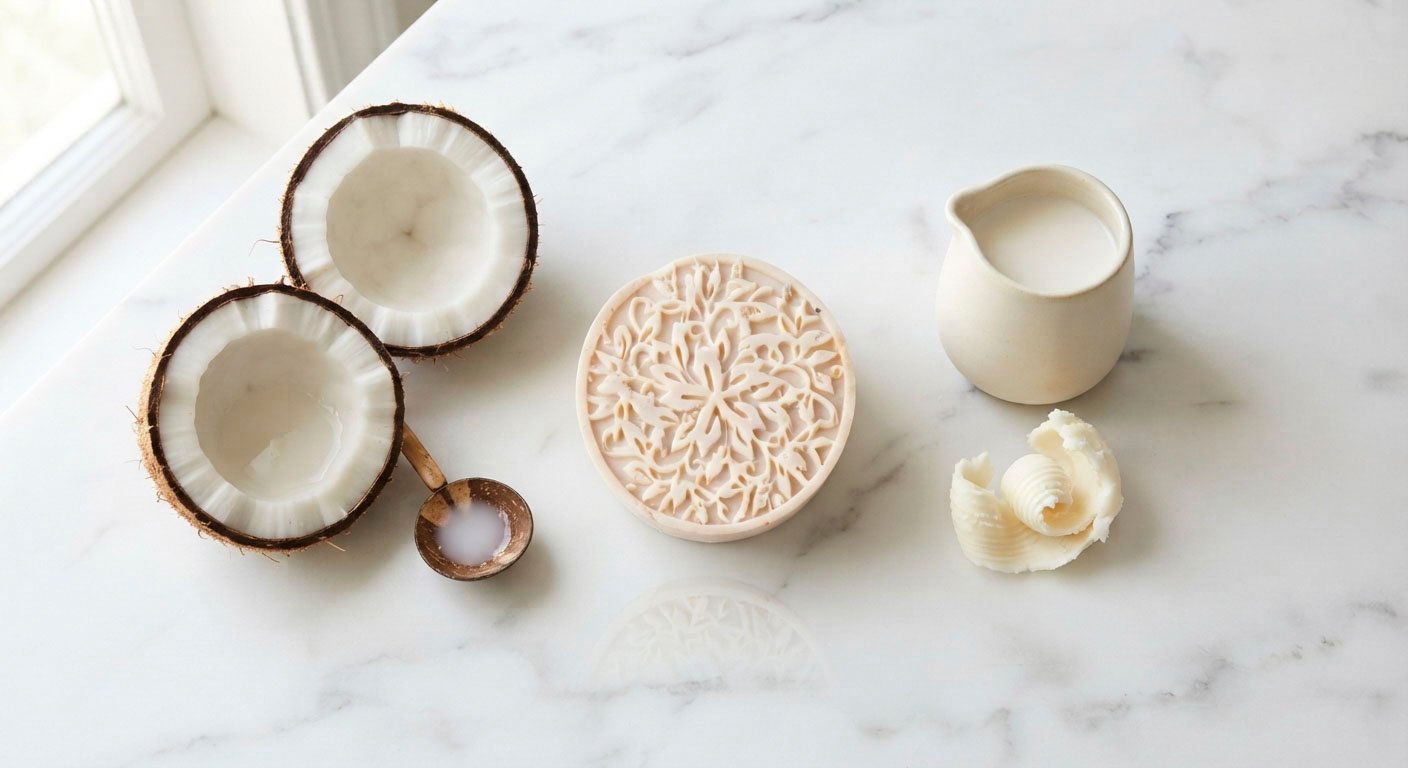
Coconut Milk Soap is the right choice for everyday dry skin because lauric acid — its core active — acts as a biomimetic moisturizer, replenishing the skin's lipid bilayer directly instead of just coating the surface temporarily.
Where Goat Milk works by clearing away what shouldn't be there, Coconut Milk works by putting back what washing takes away. Cocoa butter and shea butter are folded into the base alongside coconut milk itself, giving the bar a rich, cushioned lather that rinses fully clean without the greasy residue heavier oil-only bars can leave behind.
Why This Bar Is Different
- Lauric acid (C12) replenishes intercellular lipids at the structural level, not just on the surface
- Cocoa and shea butter add immediate, lasting softness
- Rinses completely clean — no greasy after-feel, unlike straight oil-based bars
- The most "everyday, no-decision-needed" bar in the collection
3. Rice Milk Soap — Best for Silky Texture & Glow
Best for Normal & Combination Skin Wanting Smoothness — Handmade Cold-Process
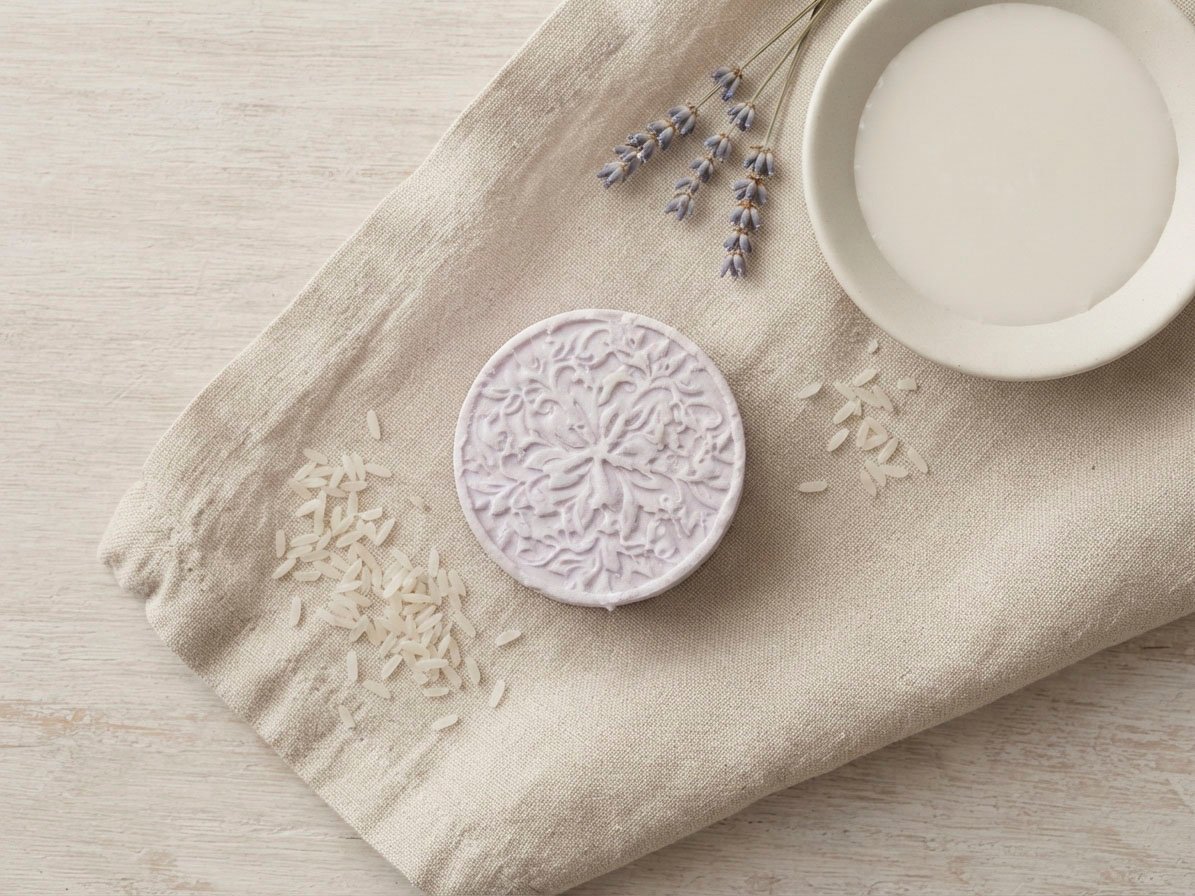
Rice Milk Soap is the right choice for anyone wanting silky, light-catching skin because it's built directly around the centuries-old rice-water ritual — real frozen rice milk carried through the entire cold-process, paired with rice bran oil, for a smoothness that reflects light rather than a claim that changes skin tone.
This is deliberately not a "brightening" bar, and it's deliberately not a heavy-moisture bar either — those are different jobs already covered elsewhere in our range. What Rice Milk Soap does that nothing else in the collection does is texture: the rice-water tradition has been used for generations specifically for how it leaves skin and hair feeling — smooth, soft, almost polished. An amla glycerite rounds out the formula with a light antioxidant presence, without turning this into an actives-forward treatment bar.
Why This Bar Is Different
- Real frozen rice milk carried through the entire cold-process, not added as an afterthought
- Rice bran oil reinforces the same silky-texture story from the oil phase
- A gentle floral scent — lavender-led, with soft jasmine and eucalyptus accents
- The only bar in the collection built around feel rather than a specific skin concern
▸ Skin flaking, reactive, or eczema-prone? Goat Milk Soap.
▸ Just want a reliable everyday moisturizing bar? Coconut Milk Soap.
▸ Want smooth, soft, light-catching skin without a targeted concern? Rice Milk Soap.
▸ Not sure where to start? Coconut Milk is the safest first pick for most skin types.
How to Choose Between the Three
Match the soap to what your skin is actually doing right now, not to which ingredient sounds the most premium. All three are equally natural, equally handmade in small batches in Lahore, and equally free of sulfates and synthetic hardeners — the difference that matters is mechanism, not marketing.
Skin flaking or rough in patches? That's a buildup problem, not just a dryness problem — Goat Milk Soap's lactic acid is built for that specifically.
Skin just generally tight and thirsty after washing? That's a straightforward moisture-replacement job — Coconut Milk Soap's lauric acid is the direct answer.
Skin fine day-to-day but you want it to feel and look smoother? That's a texture goal, not a repair goal — Rice Milk Soap is built for exactly that, and nothing else in the collection is.
Can you use more than one? Yes — many customers rotate Coconut Milk for daily use with Goat Milk brought in during dry winter months or flare-ups, or keep Rice Milk as a gentle everyday alternative when they want a lighter, silkier finish instead of a rich one.
Comparison Table: Which One Should You Buy?
| Soap | Best For | Signature Ingredient | Feel | Price |
|---|---|---|---|---|
| Goat Milk Soap | Dry, reactive & eczema-prone skin | Lactic Acid + Bakuchiol | Renewing | Rs. 1,350 |
| Coconut Milk Soap | Everyday dry skin | Lauric Acid (C12) | Rich & moisturizing | Rs. 1,300 |
| Rice Milk Soap | Normal/combination skin, texture-focused | Rice-Water Ritual | Silky & luminous | Rs. 1300 |
Handmade in small batches in Lahore. PCSIR Grade 1 Certified brand.
Shop the Milk Soap Collection →
A Final Word
There's no single "best" milk soap — there's the right one for what your skin needs this month. If dryness is your main concern beyond just these three, our full breakdown of the top soaps for dry skin in Pakistan digs deeper into the wider collection.
Frequently Asked Questions
Q: What is the difference between goat milk soap and coconut milk soap?
A: Goat Milk Soap works through naturally occurring lactic acid, a mild alpha-hydroxy acid that gently exfoliates and clears dead skin buildup — best for dry, reactive, or eczema-prone skin. Coconut Milk Soap works through lauric acid, which replenishes the skin's lipid bilayer directly for everyday moisture.
Q: Which milk soap is best for dry skin?
A: It depends on the kind of dry skin. For everyday dryness, Coconut Milk Soap's lauric acid is the direct moisture-replacement answer. For dry skin with flaking, buildup, or reactive/eczema-prone patches, Goat Milk Soap's lactic acid addresses the underlying buildup instead of just adding moisture on top.
Q: Is rice milk soap good for glowing or brightening skin?
A: Rice Milk Soap is built for silky texture and a light-catching, luminous finish through the traditional rice-water ritual, rather than for tone-correction or pigmentation. If uneven skin tone or dullness is your specific concern, our Turmeric & Licorice Soap is formulated for that instead.
Q: Can I use all three milk soaps together in a routine?
A: Yes. A common approach is using Coconut Milk Soap as a daily bar, bringing in Goat Milk Soap during dry winter months or flare-ups, and using Rice Milk Soap when you want a lighter, silkier finish than Coconut Milk's richness.
Q: Which Alam Ara milk soap is best for sensitive or eczema-prone skin?
A: Goat Milk Soap. Its naturally occurring lactic acid gently clears buildup without the irritation harsher exfoliants can cause, while Allantoin is included specifically to calm reactive skin during use.
Q: Is coconut milk soap good for oily skin?
A: Coconut Milk Soap is formulated primarily for dry skin via lauric acid, and its richer lather may feel heavier than what oily or acne-prone skin needs. For oily or acne-prone skin, our Aloe Vera & Neem Soap with tea tree oil or Charcoal & Honey Soap are better-suited picks.
Q: What is the rice-water ritual, and does Rice Milk Soap actually use it?
A: The rice-water ritual is a generations-old beauty tradition using the water rice is soaked or rinsed in for its effect on skin and hair smoothness. Rice Milk Soap carries real frozen rice milk through the entire cold-process method — not a diluted extract added at the end — paired with rice bran oil to reinforce the same silky-texture effect.
Q: How often should I use each of these milk soaps?
A: All three are gentle enough for daily use as a face and body bar. Goat Milk Soap's lactic acid content means most people do fine using it daily, but highly reactive skin may want to start at 3–4 times a week and build up.
Q: Which milk soap should a first-time buyer start with?
A: Coconut Milk Soap is the safest starting point for most skin types — it addresses general dryness without a targeted exfoliation or texture claim, making it the easiest to judge how your skin responds before choosing a more targeted bar.


