
Is Your Goat Milk Soap Actually Real Milk? A Pakistan Buyer’s Guide, 2026
TL;DR — Quick Answer Goat milk soap works for dry, sensitive, and eczema-prone skin because raw goat milk naturally contains lactic acid,…
TL;DR — Quick Answer
Goat milk soap works for dry, sensitive, and eczema-prone skin because raw goat milk naturally contains lactic acid, fatty acids, and vitamins A, D & B6 that gently exfoliate while supporting the skin barrier. Most goat milk soap sold in Pakistan is built on a wholesale “goat milk soap base” or reconstituted milk powder — not real milk. Alam Ara’s Goat Milk Soap is cold-process, with real fresh goat milk added twice, plus Bakuchiol Seed Oil and Allantoin for barrier repair. Cured a minimum of 6 weeks. From Rs.1350.
Key Takeaways
- Real goat milk contains naturally occurring lactic acid, fatty acids, and vitamins A, D & B6 — this is what does the actual work.
- Most “goat milk soap” in Pakistan is built on a wholesale melt-and-pour base or reconstituted milk powder, not fresh liquid milk.
- Alam Ara’s version is cold-process, with real fresh goat milk added twice, plus Bakuchiol Seed Oil and Allantoin. See the full formulation →
- Pakistani skin faces hard water, winter TEWL, and smog particulates that make barrier-supporting soap more important here than in most climates.
Table of Contents
- 01. What Is Goat Milk Soap, Actually?
- 02. Is Your “Goat Milk Soap” Actually Made With Real Milk?
- 03. What Does the Science Say Goat Milk Actually Does for Skin?
- 04. Why Does Pakistani Skin Need This More Than Most Climates Do?
- 05. What’s Actually Inside Alam Ara’s Goat Milk Soap?
- 06. How Can You Tell If a Goat Milk Soap Really Uses Fresh Milk?
- 07. Is Goat Milk Soap Good for Eczema and Sensitive Skin?
- 08. How Should You Use Goat Milk Soap for Best Results?
- 09. Frequently Asked Questions
What Is Goat Milk Soap, Actually?
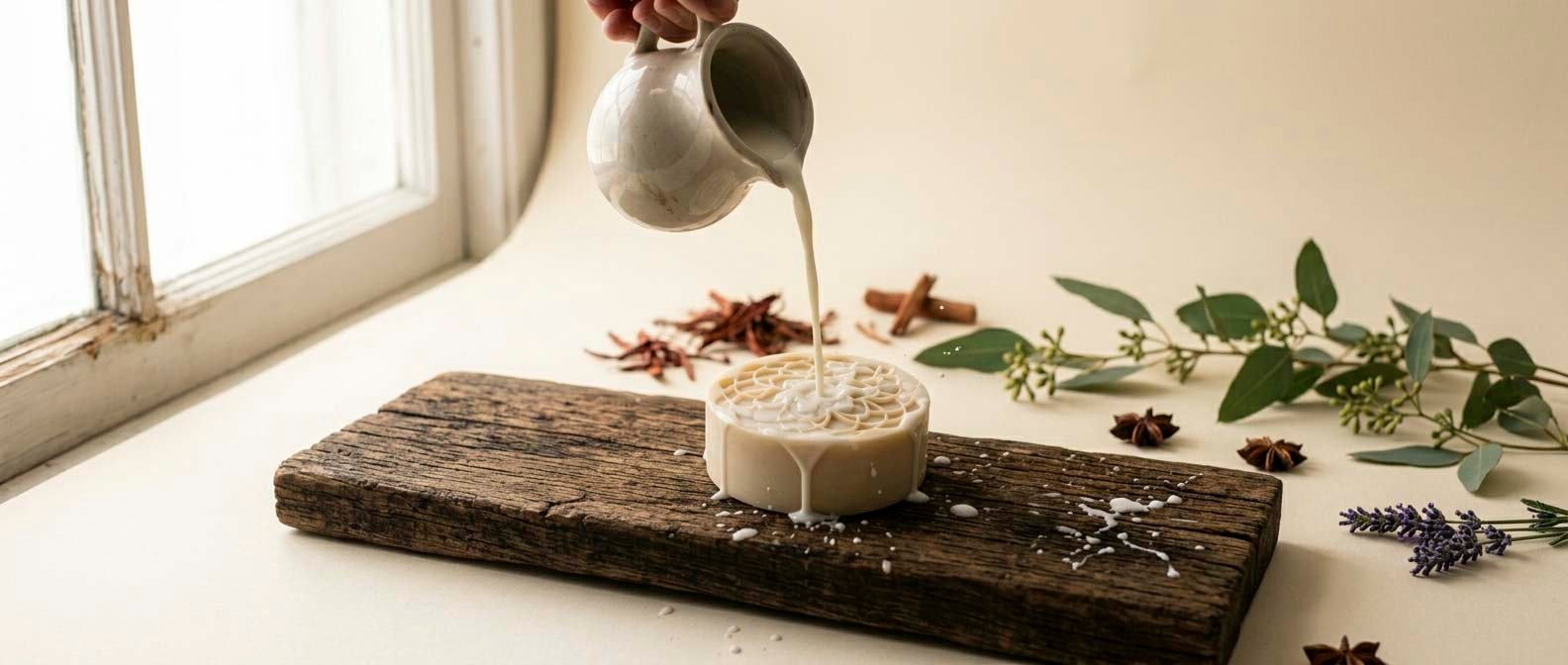
Goat milk soap is soap made through saponification — the chemical reaction between oils, an alkali (lye), and a liquid — where some or all of that liquid is goat milk instead of plain water. That’s the textbook definition, and on paper it sounds simple. In practice, though, it hides the single most important question a shopper never gets asked: how did the goat milk actually get into the bar? That detail changes everything about whether the soap on the shelf delivers real benefits or just a name.
Goat milk itself is not a new skincare discovery. It has been used for centuries across dairy-farming cultures specifically because its composition sits closer to human skin chemistry than cow milk or plain water. But goat milk only does anything for your skin if it survives the soap-making process intact — and that is exactly where most of the market quietly cuts corners.
Is Your “Goat Milk Soap” Actually Made With Real Milk?
There are three very different ways a bar can end up labeled “goat milk soap,” and Pakistani shoppers are rarely told which one they’re buying.
The first is melt-and-pour goat milk soap base — a pre-manufactured soap block sold wholesale in bulk to soap sellers, already containing a small percentage of goat milk, often in powdered form. The seller melts this block down, adds fragrance and color, pours it into molds, and sells it as “handmade.” No actual saponification happens at the seller’s end — the real soap-making already happened at an industrial supplier, days or weeks earlier, using recipes and ratios the seller has no control over.
The second is reconstituted milk powder folded into an otherwise standard cold-process recipe. This is more legitimate than a soap base, since the seller is genuinely saponifying their own soap — but the milk itself has already been through a high-heat drying process before it ever reaches the soap pot, and that heat degrades a meaningful share of the natural lactic acid and vitamin content before it ever touches your skin.
The third — and the least common, because it is the hardest to execute — is real fresh liquid goat milk, added during a genuine cold-process method. Here, the milk itself replaces some or all of the water in the lye solution, or is added later at trace. This is technically demanding: fresh milk scorches and curdles if the lye solution runs too hot, discoloring the bar and creating an unpleasant burnt-milk smell. That difficulty is precisely why most commercial sellers avoid it in favor of a base or powder — it is slower, riskier, and more expensive to get right.
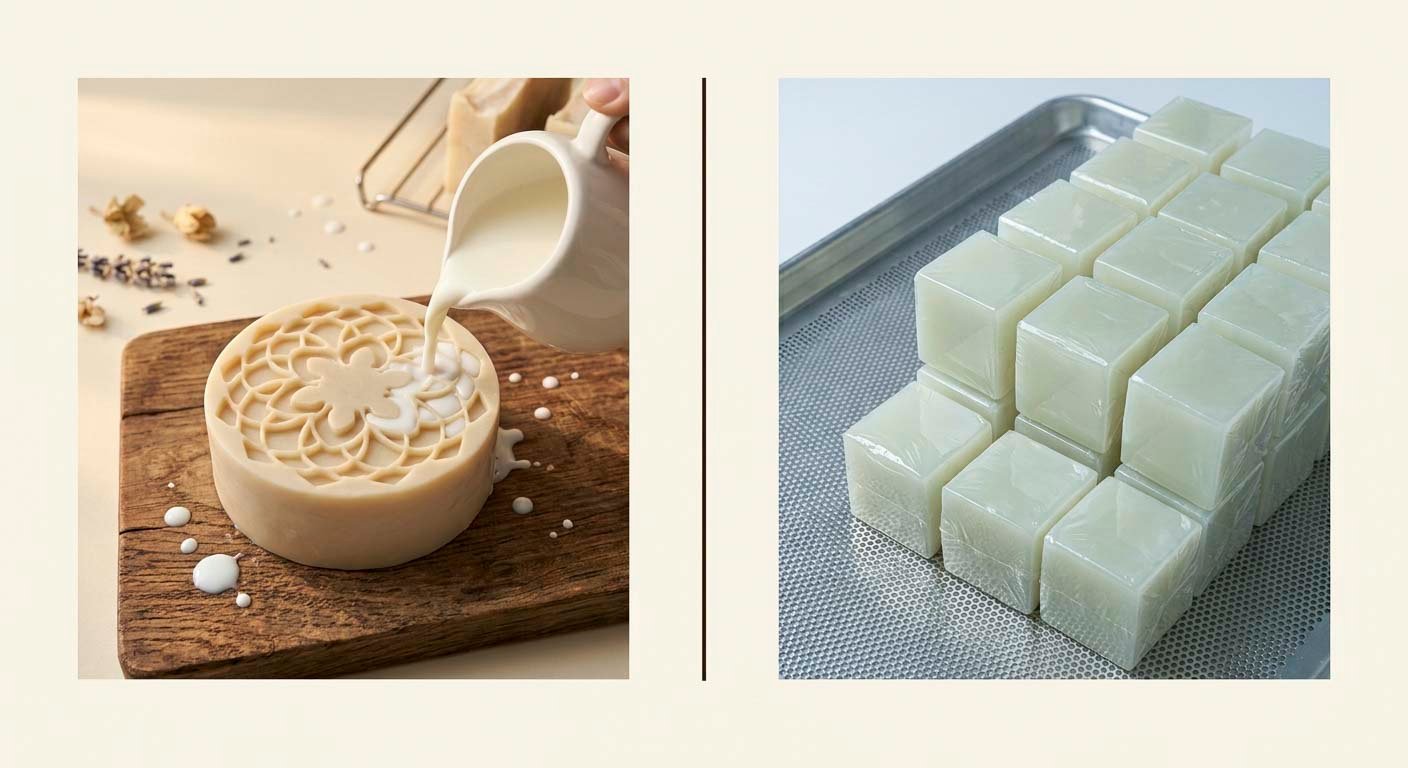
🐐 Real Goat Milk vs. Goat Milk Soap Base — At a Glance
| FACTOR | MELT-AND-POUR BASE | REAL FRESH MILK (COLD-PROCESS) |
|---|---|---|
| Where it’s made | Pre-manufactured by a wholesale supplier | From scratch, by the soap maker |
| Milk form | Powdered, small % | Fresh liquid, added twice |
| Cure time | None — same-day pour and sell | Minimum 6 weeks |
| Lactic acid / vitamin content | Degraded by prior heat processing | Preserved by low-heat cold-process |
Checking the actual Pakistani market makes this pattern obvious. Several sellers of “goat milk soap” describe their bars as built on a goat milk soap base. At least one budget competitor’s soap range lists milk powder rather than milk directly. And Pakistani wholesale suppliers openly sell goat milk melt-and-pour base as a bulk raw material to soap sellers across the country — which is very likely where a meaningful share of the “handmade” goat milk soap in this market actually comes from, regardless of how artisanal the packaging looks.
Alam Ara’s Goat Milk Soap is the third method. Real fresh goat milk is added twice during the cold-process — once at the lye phase, and again after trace — specifically because a single addition means more of the milk sits exposed to the heat of saponification for longer. Adding it twice preserves more of what makes goat milk worth using in the first place, rather than diluting it into a token ingredient on a label.
What Does the Science Say Goat Milk Actually Does for Skin?
Goat milk’s reputation is not just folklore or marketing. Raw goat milk contains a specific combination of naturally occurring compounds that have a real, documented mechanism of action on skin.
- Lactic acid — a naturally occurring alpha-hydroxy acid (AHA) that gently loosens the bonds holding dead skin cells together, encouraging smoother, brighter-looking skin without the sting or irritation risk of stronger synthetic exfoliants.
- Fatty acids — support the skin’s own lipid barrier rather than simply coating the surface, which is a meaningfully more durable kind of skincare than surface moisturizing alone.
- Vitamins A, D and B6 — contribute antioxidant and skin-conditioning properties that support overall skin health over repeated use.
- A near skin-identical pH — closer to skin’s natural pH than most commercial soap, which cleanses without stripping the skin’s own protective oils as aggressively.
Why Does Pakistani Skin Need This More Than Most Climates Do?
Goat milk soap is useful almost anywhere. But Pakistan’s specific environment makes the barrier-supporting properties of real goat milk more urgent here than in most of the markets this product category was originally built for.
- Winter TEWL (Trans-Epidermal Water Loss): Dry, cold air across Lahore, Karachi and Islamabad pulls moisture out of skin faster than temperate Western climates ever require goat milk soap to compensate for.
- Smog and PM2.5: Airborne pollution particles generate free radicals on contact with skin, layering oxidative stress on top of dryness — a combination most goat milk soap marketing, built around Western climates, was never designed to address.
- Hard water: Common across Pakistani cities, leaving mineral residue that compounds dryness. A gentle, high-fat cleanser matters more under these conditions, not less.
- Genetics: Pakistani skin tends to combine more active oil glands with higher melanin content than the skin types most goat milk soap brands are formulated around — meaning harsh commercial soap causes rebound oiliness and hyperpigmentation risk on top of dryness.

What’s Actually Inside Alam Ara’s Goat Milk Soap?
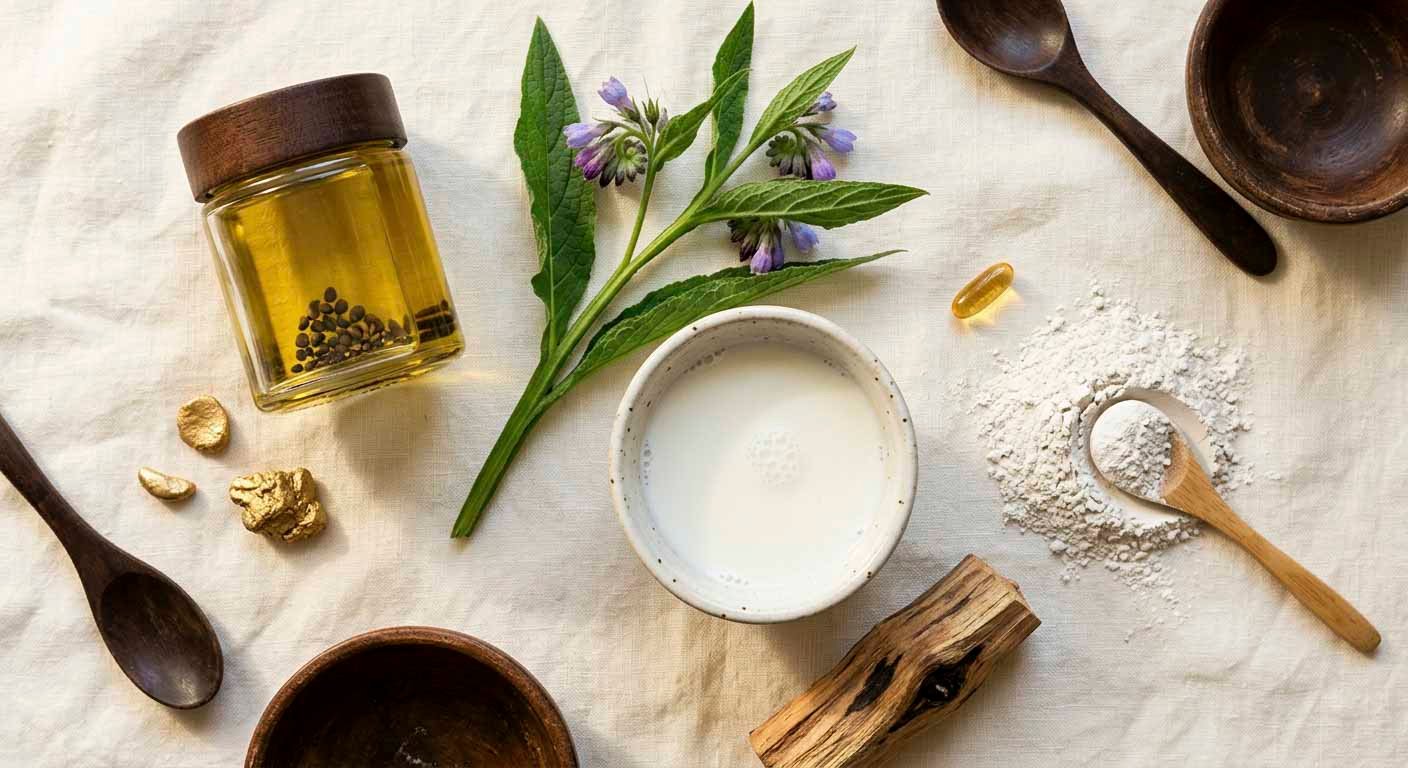
Beyond the real fresh goat milk added twice during cold-process, the formula layers in a small number of purposeful actives rather than a long list of filler ingredients.
- Bakuchiol Seed Oil — an Ayurvedic, plant-derived ingredient valued for supporting skin renewal, often described as a gentler alternative to synthetic retinoids.
- Allantoin — a barrier-repair compound that supports the skin’s own healing and soothing processes.
- Comfrey — a botanical long used for skin-soothing, and notably the natural plant source allantoin is traditionally derived from, reinforcing the same barrier-repair action from two directions at once.
- Kaolin Clay — the gentlest of the clay family, added in a light hand for mild, non-drying cleansing that won’t over-strip already dry or sensitive skin the way stronger clays like bentonite can.
- Vitamin E — an antioxidant that helps protect skin from oxidative stress, relevant alongside the smog exposure discussed above.
- Soy Lecithin — a natural emulsifier that helps the bar’s fats blend smoothly against skin for a conditioning, non-stripping cleanse.
- Sandalwood-infused olive oil & pure patchouli essential oil — the only scent source; no synthetic fragrance anywhere in the formulation.
The bar is cured a minimum of six weeks before it is ever sold, in line with proper cold-process practice. A melt-and-pour base soap can be poured, cooled, and sold within a day; a genuine cold-process bar needs weeks for saponification to fully complete and excess moisture to evaporate, producing a harder, longer-lasting, gentler final bar.
How Can You Tell If a Goat Milk Soap Really Uses Fresh Milk?
If you’re shopping for goat milk soap anywhere in Pakistan — not just from Alam Ara — there are a few practical ways to check what you’re actually buying before you pay for it.
💡 4-Point Real Milk Checklist
- Ingredient list says “Goat Milk,” not “Goat Milk Powder” or no milk reference at all
- Seller states an actual cure time (real cold-process needs weeks, not days)
- Price reflects real production cost — very cheap + big claims is a red flag
- Seller can describe their process (when milk is added, cure length, oils used)

Is Goat Milk Soap Good for Eczema and Sensitive Skin?
Many people with eczema-prone or generally sensitive skin report real relief from switching to goat milk soap, and the underlying mechanism — gentle lactic-acid exfoliation combined with fatty-acid barrier support — is genuinely plausible rather than purely anecdotal.
It’s worth being straightforward here rather than overselling it, though. Goat milk soap is not a medically proven eczema treatment, and some formulations — particularly ones loaded with synthetic fragrance — can irritate already-compromised skin rather than help it. If you have diagnosed eczema or psoriasis, the sensible approach is to patch-test any new soap on a small area first, and to treat it as a gentle daily cleanser that complements your dermatologist’s guidance rather than replaces it.
How Should You Use Goat Milk Soap for Best Results?
Getting the most out of a real cold-process goat milk bar comes down to a few consistent habits.
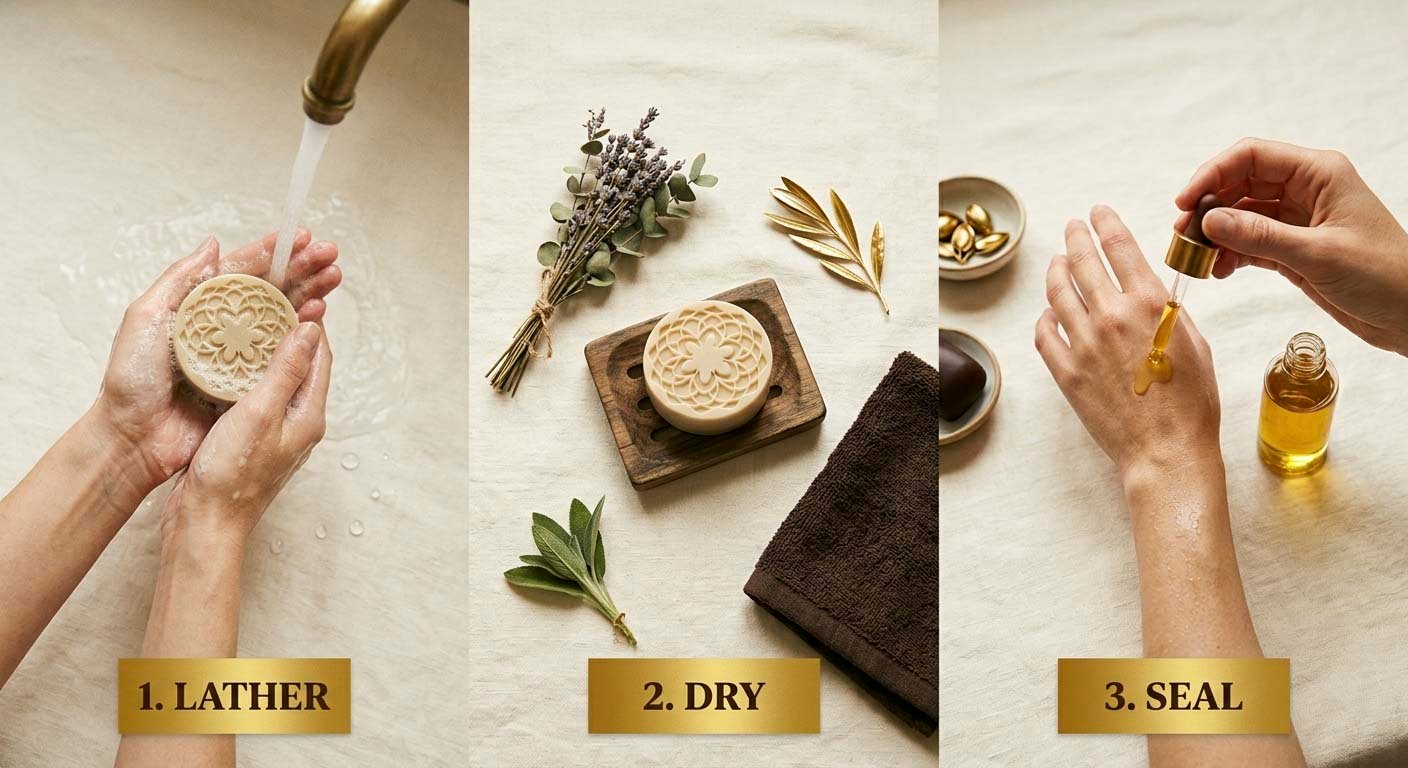
- Use lukewarm water, never hot — hot water strips away the same lipid layer the soap’s fatty acids are working to preserve.
- Build a lather in your hands or with a soft cloth rather than rubbing the bar directly against skin.
- Rinse thoroughly and pat skin dry rather than rubbing.
- While skin is still slightly damp, follow up with a barrier-supporting oil or butter — especially important during Pakistani winters.
- Store on a draining soap dish between uses; without synthetic hardeners, a natural bar needs to dry out fully to last.
🐐 Real Goat Milk. No Shortcuts.
Experience the Difference Real Milk Makes
Cold-process. Real fresh goat milk added twice. Cured a full 6 weeks. No melt-and-pour base, ever.
Frequently Asked Questions
Q: Is goat milk soap good for eczema and sensitive skin?
Many people with sensitive or eczema-prone skin find goat milk soap gentler than commercial bars, thanks to its natural lactic acid and fatty acid content. It isn’t a medical treatment, though — patch-test first, and check with a dermatologist for persistent flare-ups.
Q: What’s the difference between goat milk soap and goat milk soap base?
Goat milk soap base is a pre-manufactured, wholesale melt-and-pour product that sellers melt and re-pour with fragrance and color — no real saponification happens on their end. Real goat milk soap, like Alam Ara’s, is made from scratch using fresh liquid milk during the cold-process method.
Q:Does goat milk soap actually contain real milk, or is it just marketing?
It depends entirely on the brand. Some Pakistani sellers use real fresh milk; others use a wholesale soap base or reconstituted milk powder. Check whether a brand describes their process (cold-process, cure time, when the milk is added) — vague “100% natural” language without process detail is often a sign of a base-soap product.
Q: Are there any side effects of goat milk soap?
Goat milk soap is generally well-tolerated, but the naturally occurring lactic acid can be mildly irritating for very reactive skin, and added fragrance oils can trigger sensitivity in some people. Anyone with a diagnosed milk protein allergy should be cautious, and a patch test is always sensible before full use.
Q: Can I use goat milk soap on my face?
Yes — its near skin-identical pH and gentle cleansing make it suitable for face and body for most skin types. If you have very reactive or acne-prone skin, introduce it gradually alongside your existing routine.
Q: How long does it take to see results from goat milk soap?
Most people notice softer, calmer skin within 1–2 weeks of consistent use. For more significant dryness or sensitivity, allow 3–4 weeks of daily use before judging results.
References & Further Reading
- Asthma and Allergy Foundation of America — “Can Goat Milk Soap or Beef Tallow Products Help My Eczema?”
- Alam Ara — The Ultimate Dry Skin Rescue
- Alam Ara — Handmade Soap Benefits: The Scientific Guide to Natural Skincare
Disclaimer: This article is for informational purposes only and does not constitute medical advice. Consult a dermatologist for persistent skin concerns, especially eczema or psoriasis.


